Putting a Price-Tag on Inequality

America’s most typical adults would be three-times richer if the United States distributed wealth as equally as France does.

Posted on January 12, 2015
by Sam Pizzigati

http://inequality.org/putting-pricetag-inequality/#sthash.dqyGeCBH.dpuf

How much does inequality cost the average American family? What price do we pay, in actual dollars and cents, for tolerating an economy fixated on pumping our treasure to the top?

That question has no simple answer. Inequality, after all, imposes upon us a wide range of costs that don’t easily reduce to dollars and cents.

How much, for instance, should we value an added year of life? We know — from literally hundreds of research studies over the years — that people live longer, healthier lives in more equal nations.

France and the United States have about the same wealth per adult. But France’s more equal wealth distribution makes a huge difference for average families.

We also know that more equal societies have lower levels of mental illness and fewer teenage pregnancies, fewer homicides and higher levels of trust. How do we place dollar signs on quality-of-life indicators like these? That can get complicated.

On the other hand, dollar signs do come easy when we’re talking about income and wealth. So let’s limit our exploration into the price we pay for tolerating inequality to just these two yardsticks.

The Economic Policy Institute has gone through one exercise along this line. How much income would middle class Americans be making today, EPI researchers asked, if the United States had the same distribution of income today as our nation had back at the end of the 1970s?

The difference between now and then could hardly be starker. Since 1979, households in America’s top 1 percent have more than doubled their share of the nation’s income, from 8 to nearly 20 percent.

What if this increase in inequality had never happened? What if middle class American households were taking in the exact same share of the nation’s income they took in four decades ago?

Economic Policy Institute researchers focused their calculations on 2007, the last year before the Great Recession. In that year, the average middle class income in the United States — the average for the middle 60 percent of American households — amounted to $76,443.

But if middle class households in 2007 lived in an America as equal as the America of 1979, that average income would have been $94,310. In other words, inequality is costing the average American middle class family about $18,000 a year.

That’s comparing, remember, America today with America yesterday. But the global economy, some might argue, has changed fundamentally over the past four decades. We live in a different world. Simple comparisons of then vs. now no longer tell us much.

The United States ranks as the world’s most unequal major developed nation.

For argument’s sake, let’s accept this rather dubious claim — and make a different comparison. Let’s compare the wealth of ordinary Americans today with the wealth of ordinary people in more equal nations.

France makes for a good comparison. France and the United States, the research institute of the Swiss bank Credit Suisse reported last fall, have about the same total wealth per adult.

If you divide the wealth of the United States by our adult population, you end up with $347,845 per adult. If you do the same computing with France’s wealth and population, you end up with $317,292 per adult. The average American would have, in sum, slightly more wealth than the average person in France if both nations divvied up their wealth on a totally equal basis.

But total equality, of course, reigns in neither France nor the United States. The United States ranks as the most unequal major developed nation in the world. France ranks as more equal than nations like the United States and Britain, but less equal than nations like Japan and Sweden.

In France today, “median” adults — those with more wealth than the poorest half of France’s adult population but less wealth than the richest half — have $140,638 in net worth to their name.

In the United States, by contrast, median adult wealth stands at a mere $53,352.

The bottom line? If the United States had as equal a distribution of wealth as France, typical American adults today would have almost triple their current net worth.

So how much does inequality matter to America’s middle class? More than we realize. Much more.

Sam Pizzigati edits Too Much, the Institute for Policy Studies monthly on excess and inequality. His latest book: The Rich Don’t Always Win: The Forgotten Triumph over Plutocracy that Created the American Middle Class, 1900-1970.

Posted in Newsworthy | Comments Off on Putting a Price-Tag on Inequality

Who Rules the World?

November 20, 2014
How a Concentration of Wealth and Political Power Undermines Democracy
by BENJAMIN DANGL

Reprinted from Counterpunch 

With a $4 billion price tag, the recent US midterm election was the most expensive in the country’s history. For the first time in eight years, the Republicans gained complete control of Congress, as well as won victories in key Senate and gubernatorial races across the country.

With elections in the US, we are granted the illusion that voters generally have power over our elected leaders, the direction of the economy, and how to tackle climate change and other major issues. But where does the real power lie?

Wealth and political power are so dramatically concentrated in this country that elections have become a bitter farce. The recent midterm vote provides a great opportunity to reflect on the structural ways in which the system is rigged against the people.

The 2010 Citizens United Supreme Court case essentially enabled corporations and billionaires to be able buy US elections and politicians without government oversight. According to David Bossie, the plaintiff in the case and the president of the conservative Citizens United organization, the court ruling helped the Republicans win this year’s midterms.

The day after the election, Bossie said that Citizens United “leveled the playing field, and we’re very proud of the impact that had in last night’s election.” He said this corporate funding helped the republicans win, and created “a robust conversation, which is what a level playing field allows, really creates an opportunity for the American people to get information and make good decisions.”

Rather than creating a level playing field, Citizens United gives disproportionate power to corporations and elites to decide elections. Meanwhile, most voters are left disempowered on the sidelines, pawns in elections that are largely fueled by clandestine corporate money.

With this in mind, it’s no surprise that among the world’s ten richest people are the conservatives Charles and David Koch. The infamous Koch brothers are major funders of the Tea Party, and spent an estimated $290 million to aid in Republicans’ election in the recent mid-term, helping to put out some 44,000 political ads in an attempt to place the Senate back into Republican hands.

The Koch brothers’ reach is wide and disastrous; much of their wealth is from the oil industry, and they are fierce proponents of the controversial Keystone XL Pipeline. If the pipeline goes through, the brothers are set to profit an estimated $30 billion.

As a result of Citizens United, “this election is turning out to be kind of the Wild West,” political reporter Lee Fang told Democracy Now during the recent election day. “Not only are campaign entities raising and spending unlimited amounts, much of it in secret, but we have no cop on the beat, we have no enforcement of election law…”

The impact of Citizens United corresponds to a widely-shared view that the US is indeed not a democracy. In fact, this perception was confirmed in a research study released earlier this year by professors at Princeton and Northwestern University.

Their research found that the wealthy and business elites of the nation wield all of the power, leaving most people on the margins. The report explained, “When a majority of citizens disagrees with economic elites and/or with organized interests, they generally lose. Moreover, because of the strong status quo bias built into the US political system, even when fairly large majorities of Americans favor policy change, they generally do not get it.”

This concentration of political power is reflective of the global concentration of wealth. The 85 richest people in the world now have the same wealth as the 3.5 billion poorest. That was one of the findings of a report from UK-based Oxfam International, which also concluded that the wealthiest 1% of the global population owns roughly half of the world’s wealth. Inequality is rising most rapidly in the US, where the richest 1% have benefitted the most from economic growth since 2009. During that same period, the poorest 90% in the US became poorer.

“This massive concentration of economic resources in the hands of fewer people presents a significant threat to inclusive political and economic systems,” the Oxfam report stated.

Just as most of the world’s wealth is in the hands of a few people, according to a recent article in the academic journal Climatic Change, two-thirds of man-made global warming emissions were produced by just 90 companies, with Chevron, Exxon and BP leading the list as the biggest polluters. Half of these emissions were from the past 25 years.

“There are thousands of oil, gas and coal producers in the world,” Richard Heede, the author of the journal article, told the Guardian. “But the decision makers, the CEOs, or the ministers of coal and oil if you narrow it down to just one person, they could all fit on a Greyhound bus or two.”

Confronting climate change requires a systemic transformation of how our economies are run and who runs them. Part of this radical change will involve disempowering the global 1% and the disaster-producing industries they profit from.

Across the US, we are living in a dream state; crisis is the new normal. In the face of global catastrophe, the leading political parties of the country typically offer more business as usual, meaning more corporate power to fuel democracy, more capitalism to fight inequality, more war to fight for peace, and more pollution to fight climate change.

We cannot depend on the 1% of the world to lead us away from disaster – they caused our global crises in the first place, continue to profit from them, and cannot bring about solutions from the top-down. It has to be the people’s movements leading the way from below, deconstructing capitalism and building a better world from the bottom-up.

This article originally ran on TeleSur.

Benjamin Dangl has worked as a journalist throughout Latin America, covering social movements and politics in the region for over a decade. He is the author of the books Dancing with Dynamite: Social Movements and States in Latin America, and The Price of Fire: Resource Wars and Social Movements in Bolivia. Dangl is currently a doctoral candidate in Latin American History at McGill University, and edits UpsideDownWorld.org, a website on activism and politics in Latin America, and TowardFreedom.com, a progressive perspective on world events.

Posted in Newsworthy | Comments Off on Who Rules the World?

Neil Young speaks out for Justice

Hear Neil’s new song and message for a more just and democratic world.

Posted in Newsworthy | Comments Off on Neil Young speaks out for Justice

What Has Happened to the Public Good?

The interests of the market — and the wealthy elites and corporate interests that have taken control of it — generally don’t align with the interests of the general public.

By Mike Stout

SOURCE:  http://inequality.org/happened-public-good/

Over the past several decades, we as a society have disproportionately emphasized market-based solutions to social problems.

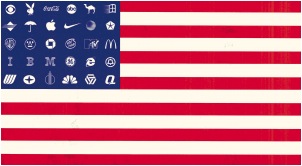
The influence of money on politics in the United States has led to a corruption of the political process.Corporate flag

As a result, when we debate policies at the local, state, and national levels we start with the assumption that “free markets” are the answer, and that government should do as little as possible to regulate or interfere with the market. This discourse has been widely adopted by both major political parties in the United States.

The problem with this approach to policymaking is that the interests of the market, and the small number of wealthy elites and corporate interests that have taken control of it, generally don’t align with the interests of the general public.

As a society, we have emphasized market-based solutions to social problems. – See more at: http://inequality.org/happened-public-good/#sthash.G8uypduF.dpuf

The market has one objective — to produce profits. Profits are generated through competition. However, profitability and competition often come at the expense of the natural environment in the form of pollution, at the expense of living wages for low-skill workers, and at the expense of opportunity, which becomes more highly concentrated into a relatively small proportion of people’s hands as they accumulate wealth at a rate that is faster than economic growth (as Piketty so elegantly illustrates in his book Capital in the 21st Century).

As wealth and income have become increasingly concentrated into fewer and fewer hands, so have political power and influence over the policymaking apparatus. The influence of money on politics in the United States is staggering and has led to a corruption of the political process. The result is crony capitalism.

The influence of money on politics in the United States is staggering.

In the current political and economic climate, the only time the general public benefits from the policymaking process is when their interests are aligned with the elites who control the policymaking apparatus. These elites, who make up less than 1 percent of the American population, are able to control policy through their disproportionate influence in the selection of candidates (who need tons of money to increase their chances of being nominated and winning the election), and through the employment of an army of lobbyists to make sure elected officials never forget how they got elected in the first place. This has resulted in a system where policies are proposed that disproportionately benefit wealthy elites and corporations who essentially own our elected officials.

The deregulation of financial markets, the lack of enforcement of environmental protections, and the dismantling of the progressive tax code through loopholes that lead to lower effective tax rates for wealthy individuals and corporations, all come at the expense of the public good.

The discourse surrounding free market policies has placed a greater emphasis on the private sector, and has made “government” a bad word. It has also made rational debate about the most appropriate way for policymakers to actually address the needs of the general public virtually impossible.

The discourse surrounding free market policies has made ‘government’ a bad word.

As if that weren’t bad enough, free market ideology has also had a disastrous effect on civil society. Individualism and competition have become increasingly engrained in our ways of thinking and talking about the causes of, and solutions to, pressing social problems. This has allowed the market to have a disproportionate influence on our political system, and has degraded civil society and civic engagement. It has therefore become nearly impossible to even discuss or debate policies that promote collaboration and cooperation, which would strengthen civil society and advance the public good.

My point here isn’t that the market is good or bad, or that the government should solve all of our problems. That’s a false dichotomy. My point is that we need a better balance among the market, the state, and civil society. The disproportionate influence of the market on the state and civil society has created problems for the functioning of our economy, as the benefits of economic growth have disproportionately gone to wealthy elites. And as money has taken over our politics, our citizens have become less trusting, more alienated, and more socially isolated.

That the market or government should solve all of our problems is a false dichotomy.

If we want to solve the pressing issues of our time, we need to change our political discourse from one which focuses solely on competition, the market, and the individual, to one which focuses on the value of community, civil society, and the public good. The market and the government should distribute resources in ways that support civil society and empower communities. Civil society, in turn, should use those resources to promote opportunity and to empower citizens, so that their needs are adequately addressed through the policymaking process.

In a social system where the market and the state operate in the interest of civil society, everyone benefits.

Dr. Mike Stout is an Associate Professor of sociology at Missouri State University. His research interests are in the area of applied/public sociology, with a specific focus on economic inequality and its relationship to social capital, civic engagement, and community and economic development.

Posted in Newsworthy | Comments Off on What Has Happened to the Public Good?

Not a Bug Splat: Artists Confront U.S. Drone Operators with Giant Picture of Pakistani Child

o-DRONE-ART-PROJECT-570By giving a face to the victims of drone strikes abroad, a powerful new art project is forcing U.S. drone pilots and policy makers to ponder the deadly consequences of one of America’s key counterterrorism programs.

Read full story here:  http://www.huffingtonpost.com/2014/04/07/drone-art-project_n_5104999.html

and here:  http://www.democracynow.org/2014/4/10/not_a_bug_splat_artists_confront


Posted in Newsworthy | Comments Off on Not a Bug Splat: Artists Confront U.S. Drone Operators with Giant Picture of Pakistani Child