This forum grows directly out of SCRC’s larger mission. If our earlier work asked how communities can participate more fully in the shaping of public life, our task now is to ask how democracy itself can be defended, renewed, and deepened under conditions of escalating danger.
Here is a list of ALL current articles on this Strategy Forum page:
Mass Demonstrations are Not a Strategy
The Popular Front – Why it is Needed Now
Democratic Strategy in the Age of A.I.
Old Institutions, New Movements, One Crisis
100+ Years of Fighting for Democracy
The A.I. Revolution No One Voted For
The Democratic Strategy Forum is a new section of our website devoted to the urgent work of political clarification to design an appropriate strategy. In this moment of democratic crisis, rising authoritarianism, and deep socioeconomic uncertainty, we intend to bring history, critical theory, and movement experience into conversation in order to better understand, and in preparation for action, the challenges of the present and the possibilities for lasting structural change.
Just as importantly, the Forum is meant as a practical contribution to the ongoing struggle against authoritarianism and fascism, helping movements think more clearly about the conditions they face and the forms of democratic action required to resist and overcome them. Our forthcoming essays will take up the immediate crises and political dilemmas of the present, including practical steps that can and should be undertaken as we analyze and act against the rising fascist threat in the United States. For example, mass demonstrations now appear to be the favored tactic. Certainly, they can build spirit and visibility—but to what end? READ our POST on that question, “Mass Demonstrations Are Not a Strategy”, here.
The Forum is grounded in a simple conviction: serious democratic strategy requires us to think across several levels at once. We must interpret the present conjuncture clearly, rehearse usable lessons of history, and develop the theoretical and strategic tools needed to act with greater intelligence, discipline, and purpose. To that end, one of our posts, “Democratic Strategy in the Age of A.I.,” addresses one of the defining theoretical questions of the present moment: how emerging technologies are reshaping power, public knowledge, and democracy itself. Framed as both a political reflection and a statement of principle, the essay argues that the challenge before us is not simply how to respond to A.I., but how to bring technology under democratic control in the service of a working people majority and as a tool to strengthen democratic change.
Presently, the forum is organized around several core areas of inquiry:
Section 1: The Midterm Elections Will Not Save Us
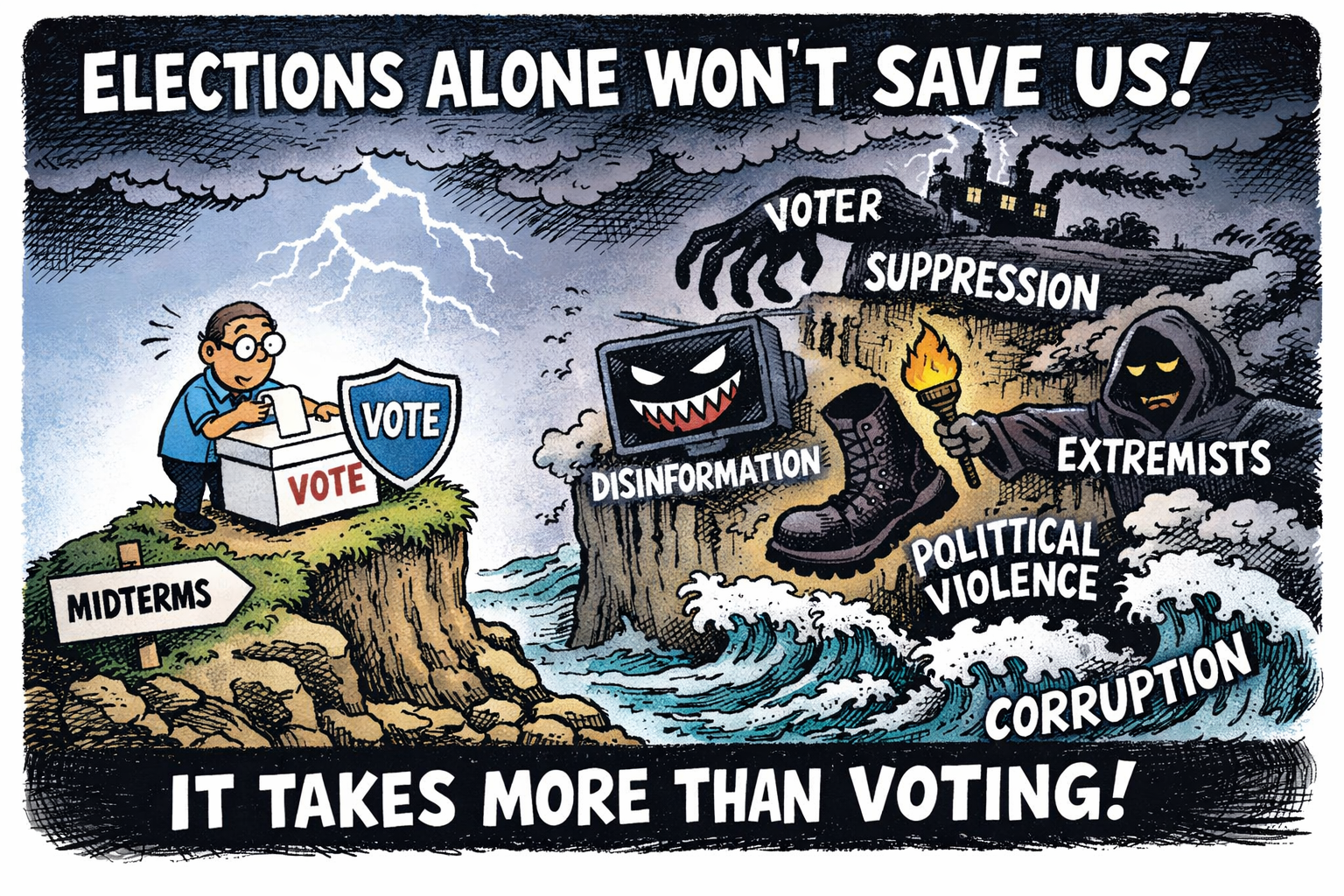
To place our hopes primarily in the midterms is to risk misunderstanding the nature of the threat.
What is required is not less electoral engagement, but more: more organization, more coordination, more sustained pressure, and more forms of collective action that extend beyond the ballot box. Without that, elections become one moment in a struggle that is being decided elsewhere.
The question is not whether we should contest elections.
The question is whether we are building the kind of power that can make those elections matter. READ our POST on this issue here.
Section 2: Lessons from History – The Popular Front
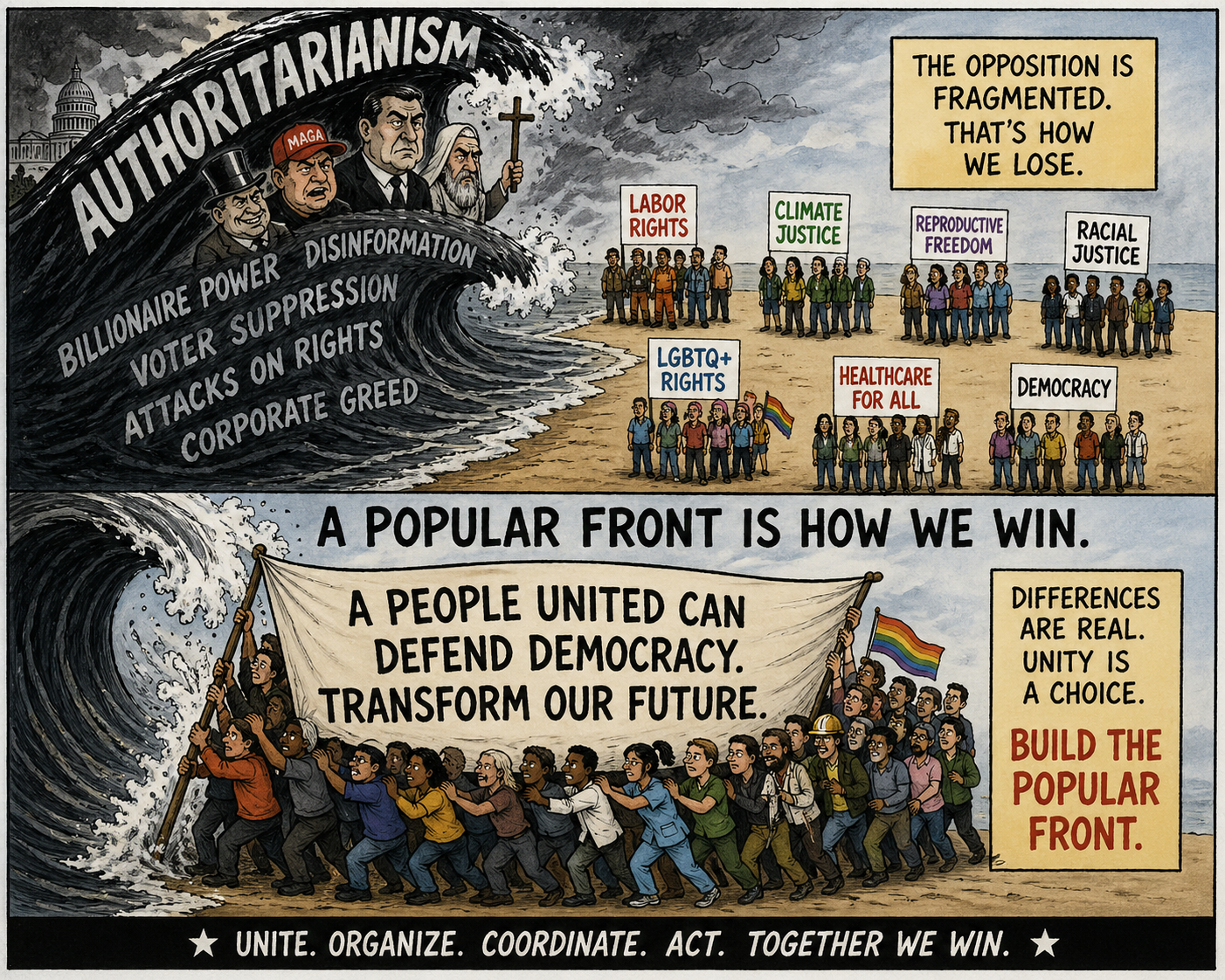
What can earlier anti-fascist and democratic coalitions teach us? It’s important to revisit the history, strengths, limits, and relevance of Popular Front politics for the present emergency. READ our POST on this issue here.
We welcome your thoughts. To respond to something you’ve read or add to the discussion, contact us at defend4demo@cbpr.org
———————————————————————————————————–